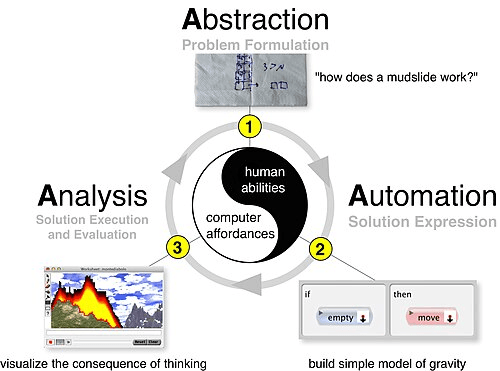
Computational thinking
Computational thinking (CT) is a problem-solving approach that draws from computer science principles to analyze problems and create solutions in a format a computer could execute. It involves breaking down complex problems into smaller parts (decomposition), identifying similarities and patterns (pattern recognition), focusing on essential information while ignoring irrelevant details (abstraction), and designing a step-by-step sequence of instructions (algorithms). CT is a transferable skill that can be applied across various disciplines and everyday situations, not just in computer programming.
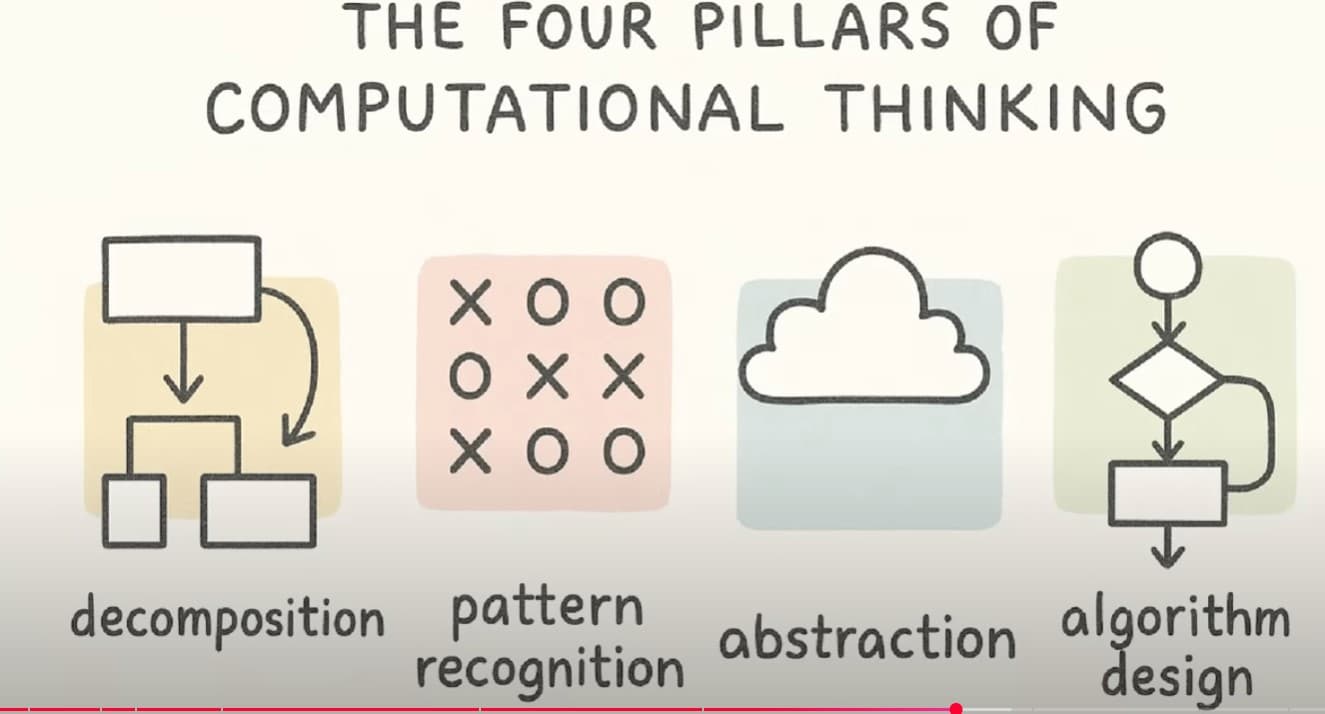
The Four Pillars of Computational Thinking
- Decomposition: Breaking down a large, complex problem into smaller, more manageable sub-problems.
- Pattern Recognition: Identifying similarities and trends within the smaller problems or between them and previously solved problems.
- Abstraction: Focusing on the most important details of a problem while disregarding irrelevant information to create a general solution or model.
- Algorithmic Thinking: Developing a step-by-step set of instructions or rules to solve each of the smaller problems and, ultimately, the larger problem.
Why Computational Thinking Matters
- Problem-Solving: CT provides a structured framework for tackling complex challenges in a logical and efficient manner.
- Universal Application: The skills and attitudes of CT are applicable in a wide range of fields, including science, math, the arts, and daily life, not just computer science.
- Future-Proofing: As technology becomes more integrated into every aspect of society, CT is essential for individuals to understand and leverage computational tools to solve future problems.
- Academic & Economic Benefits: Learning CT can improve student engagement, problem-solving abilities, motivation, and performance across various academic subjects.