General
Stoicism is not the stiff upper lip, but the illusion of victory of man against randomness.
Strength lies in the domestication of one’s emotions, not in pretending they don’t exist.
Nassim Nicholas Taleb defines a Stoic as someone who “transforms fear into prudence, pain into information, mistakes into initiation and desire into undertaking.”
Virtue
Aretē in Greek, virtus in Latin. has a very specific meaning: it’s the highest good, the excellence of character and reason, living in accordance with nature and reason. It’s not just “moral goodness” in the general sense, but the perfected state of the rational soul. In Dutch, there are a few possible translations, depending on nuance:
- “Deugd” – This is the standard and most faithful translation of “virtue” in the Stoic sense. It covers both the moral and character aspect. When Dutch philosophers discuss Stoicism, they typically translate virtue as deugd.
- “Deugdzaamheid” – More like “virtuousness” or “moral integrity,” a quality of living with virtue. Sometimes used to emphasize the practice rather than the abstract concept.
- “Voortreffelijkheid” – This is closer to the original Greek aretē (excellence). It stresses excellence in function and character, but in Dutch it sounds less philosophical and more like “superiority” or “distinction.”
👉 So if you want the philosophically accurate, Stoic translation, the best word is “deugd.”
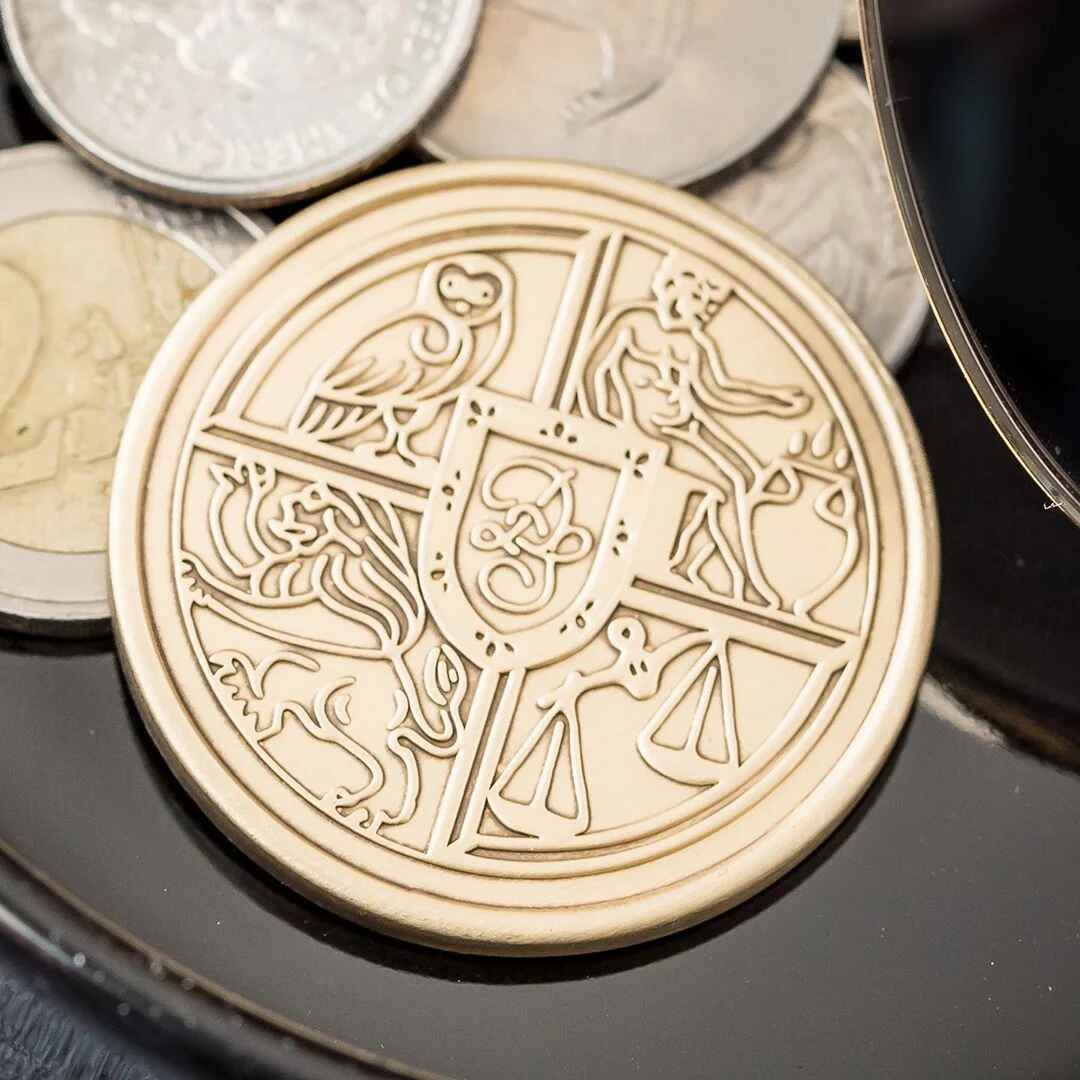
Let’s go through the four cardinal virtues as the Stoics (and earlier Plato) defined them, and how they are normally translated into Dutch:
- Wisdom (Greek: sophia, Latin: prudentia / sapientia) Dutch: wijsheid or verstandigheid Wijsheid is the broadest and most common translation, covering knowledge of what is good, bad, and indifferent. Verstandigheid is sometimes used (especially in older philosophical or theological texts) to stress “practical wisdom” or sound judgment.
- Courage (Greek: andreia, Latin: fortitudo) Dutch: moed Straightforward translation. It’s about moral courage: the ability to face pain, fear, or death with reason and steadfastness.
- Justice (Greek: dikaiosynē, Latin: iustitia) Dutch: rechtvaardigheid This is the standard philosophical/legal term. For the Stoics, it meant living in harmony with others, giving each their due, and recognizing our shared rational nature.
- Temperance (Greek: sōphrosynē, Latin: temperantia / moderatio) Dutch: matigheid or gematigdheid Matigheid is the usual translation, highlighting moderation and self-control. Gematigdheid is also used, but feels a bit more like a personality trait than a virtue in the classical sense.
✅ So, in Dutch, the Stoic virtues are usually presented as:
- wijsheid
- moed
- rechtvaardigheid
- matigheid
Together, they are referred to as de vier kardinale deugden.

Arete. To the Greeks, it meant excellence. It was the ultimate expression of human greatness—moral, physical, spiritual. It’s what the Stoics were chasing. It’s what you’re chasing today. But how do we get there? Well, it requires a certain philosophical approach. Because brilliance and inspiration and skill are not enough. “We are what we repeatedly do,” Aristotle said, “therefore excellence is not an act, but a habit.”
There is nothing wrong and undignified with emotions—we are cut to have them. What is wrong is not following the heroic or, at least, the dignified path. That is what stoicism truly means. It is the attempt by man to get even with probability. Stoicism has little to do with the stiff-upper-lip notion that we believe it means. Started as an intellectual movement in antiquity by a Phoenician Cypriot, Zeno of Kition, it developed by Roman time into a life based on a system of virtues—in the ancient sense when virtue meant virtu, the sort of belief in which virtue is its own reward. There developed a social model for a stoic person, like the gentlemen in Victorian England. Its tenets can be summarized as follows: The stoic is a person who combines the qualities of wisdom, upright dealing, and courage. The stoic will thus be immune from life’s gyrations as he will be superior to the wounds from some of life’s dirty tricks.